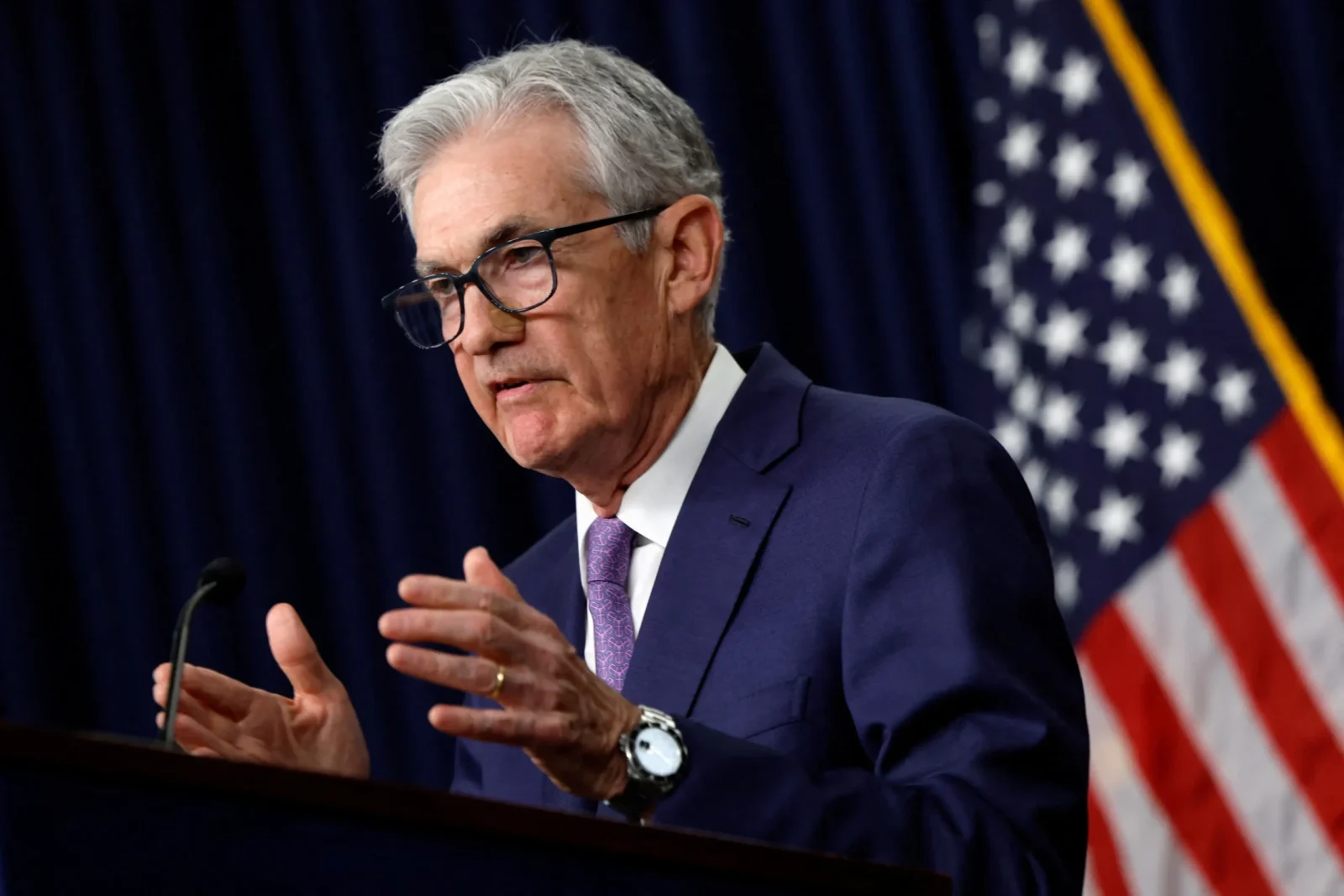
In a significant development that could reshape the U.S. economic landscape ahead of the November presidential election, Federal Reserve Chair Jerome Powell signaled a strong likelihood of interest rate cuts in mid-September. Speaking at the Kansas City Federal Reserve’s annual Jackson Hole symposium on August 26, 2024, Powell indicated that the central bank’s focus would now pivot towards protecting the job market, marking a substantial shift from its prior emphasis on combating inflation.
A Strategic Pivot: The End of the Inflation Fight?
Powell’s remarks, delivered against the stunning backdrop of Wyoming’s Grand Teton National Park, underscored the Federal Reserve’s readiness to adjust its policy stance in response to evolving economic conditions. “The time has come for policy to adjust,” Powell stated, providing a clear signal that the Fed is prepared to begin a rate-cutting cycle as soon as its September 17-18 meeting.
This anticipated policy shift comes as inflationary pressures, which have been a dominant concern for the past two years, appear to be waning. The Fed’s preferred inflation gauge, the Personal Consumption Expenditures (PCE) price index, stood at 2.5% in July 2024, down from a peak of 7% in June 2022. With inflation trending towards the Fed’s 2% target, Powell and his colleagues have concluded that the time is right to pivot towards supporting the labor market.
The Political Implications of Rate Cuts
The timing of the anticipated rate cuts, just weeks before the November 5 presidential election, has raised eyebrows among political analysts and economists alike. The potential impact of such a move on the election outcome is a subject of intense debate. Former President Donald Trump, who is running as the Republican candidate, has already criticized the Fed’s approach, accusing it of attempting to influence the election in favor of the incumbent administration.
Powell, who was appointed by Trump in 2018, faces a delicate balancing act. While the Fed is ostensibly independent of political influence, its decisions inevitably have political ramifications. By cutting rates in the lead-up to the election, the Fed risks being perceived as taking sides in the political contest. However, Powell and other Fed officials have consistently emphasized that their decisions are based on economic data and the dual mandate of promoting maximum employment and stable prices.
A Look Back: Historical Precedents for Election-Year Rate Cuts
This is not the first time the Federal Reserve has adjusted interest rates in an election year, and history offers mixed outcomes for such moves. The most notable precedent occurred in 1976, when Fed Chair Arthur Burns initiated a rate-cutting cycle just four weeks before the presidential election. Despite the easing of monetary policy, incumbent Republican President Gerald Ford lost to Democratic challenger Jimmy Carter.
In contrast, rate cuts during election years in 1996 and 2000 coincided with the re-election of incumbent presidents. In 1996, the Fed under Chair Alan Greenspan cut rates in the lead-up to President Bill Clinton’s re-election, while in 2000, rate cuts occurred as President George W. Bush narrowly won the contested election against Vice President Al Gore. These examples illustrate that while monetary policy decisions can influence the economy, their impact on election outcomes is far from deterministic.
The Current Economic Landscape: Balancing Employment and Inflation
The backdrop to the Fed’s anticipated rate cuts is a labor market that has shown signs of softening in recent months. The U.S. unemployment rate has risen from a low of 3.4% in early 2023 to 4.3% in August 2024, prompting concerns about a potential slowdown in job growth. Although the current unemployment rate is still below the long-term average, it represents a notable increase from the near-historic lows seen in the aftermath of the COVID-19 pandemic.
Powell’s comments at Jackson Hole reflect a growing consensus within the Fed that further cooling of the labor market is neither necessary nor desirable. “We do not seek or welcome further cooling in labor market conditions,” Powell said, signaling that the central bank would prioritize employment in its policy decisions. This marks a departure from the Fed’s stance in 2022, when Powell warned that higher interest rates would likely result in “pain” for workers and families as the central bank sought to tame inflation.
The Impact of High Interest Rates on the Housing Market
One of the most visible effects of the Fed’s aggressive rate hikes over the past two years has been the sharp increase in mortgage rates. The average interest rate on a 30-year fixed-rate mortgage surged from less than 3% in mid-2021 to nearly 8% by late 2023, significantly raising the cost of homeownership for millions of Americans. This surge in borrowing costs has contributed to a slowdown in the housing market, with home sales declining and price growth moderating.
While higher mortgage rates have helped to cool inflation in the housing sector, they have also created challenges for prospective homebuyers, particularly younger households and first-time buyers. The Fed’s anticipated rate cuts could provide some relief by lowering borrowing costs, potentially reinvigorating the housing market and supporting economic growth.
The Broader Economic Context: Global Factors and Domestic Challenges
The Fed’s decision-making is not occurring in a vacuum. Global economic conditions, including slowing growth in China and ongoing geopolitical tensions, have created additional challenges for the U.S. economy. Meanwhile, domestically, the labor market faces structural changes driven by automation, shifting demographics, and evolving workforce dynamics.
Powell’s comments at Jackson Hole also highlighted the importance of maintaining the Fed’s credibility and independence in the face of these challenges. “With an appropriate dialing back of policy restraint, there is good reason to think that the economy will get back to 2% inflation while maintaining a strong labor market,” he said. This optimistic outlook reflects the Fed’s belief that it can achieve its dual mandate even as it navigates the complex interplay of domestic and global economic forces.
Potential Market Reactions and Investor Sentiment
Financial markets have been closely watching the Fed’s signals, with investors speculating on the timing and magnitude of potential rate cuts. Following Powell’s remarks, stock markets rallied, reflecting optimism that lower interest rates could boost corporate profits and support economic growth. However, bond markets remain cautious, with yields on longer-term Treasury securities remaining elevated amid uncertainty about the Fed’s future policy path.
Investor sentiment will likely continue to be influenced by economic data in the coming weeks, particularly employment reports and inflation readings. If the data supports the case for rate cuts, markets may respond positively, anticipating a more accommodative monetary policy stance. However, any signs of renewed inflationary pressures could complicate the Fed’s decision-making and lead to volatility in financial markets.
Conclusion: A Critical Juncture for the Federal Reserve
As the Federal Reserve prepares for its September meeting, it finds itself at a critical juncture. The anticipated rate cuts represent a significant shift in policy, with potential implications for the U.S. economy, the upcoming presidential election, and Powell’s legacy as Fed Chair. While the central bank’s primary focus remains on promoting maximum employment and stable prices, the political and economic context adds an extra layer of complexity to its decision-making process.
Powell’s speech at Jackson Hole has set the stage for what could be a historic policy pivot, with the potential to shape the trajectory of the U.S. economy for years to come. As the Fed moves forward, it will need to carefully balance the competing demands of supporting the labor market, maintaining price stability, and preserving its independence in the face of political pressures.
Photo source: Google
By: Montel Kamau
Serrari Financial Analyst
27th August, 2024