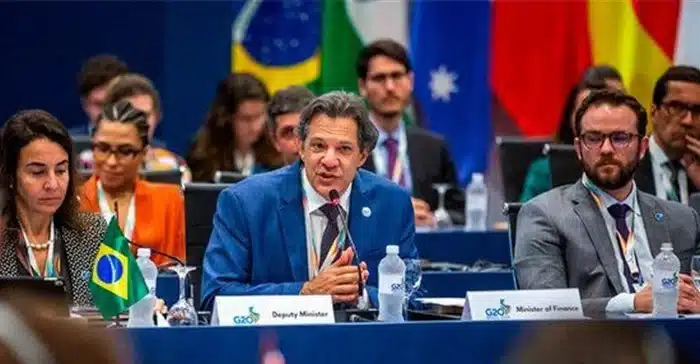
In a bold and unprecedented move, South Africa and the African Union are spearheading a global effort to impose taxes on the ultra-wealthy. This push marks the first serious attempt to establish an international standard for taxing individuals with assets exceeding $1 billion. Announced at a recent G20 finance ministers’ meeting in Rio de Janeiro, this initiative reflects a major shift in global tax policy and addresses long-standing issues of wealth inequality and tax evasion.
A Groundbreaking Proposal for Global Wealth Tax
For the first time, there’s a serious proposal on the table to ensure that those with extreme wealth contribute a fair share to public finances. The new standard aims to impose a minimum level of tax on the total value of wealth held by individuals with assets over $1 billion. This includes everything from real estate and business interests to personal treasures like art and antiques.
Gabriel Zucman, a French economist known for his work on tax justice, played a crucial role in shaping this proposal. According to a report by Zucman, billionaires currently contribute a meager 0.3% of their wealth in taxes. The new plan suggests implementing a 2% tax, which could generate between $200 billion (€184 billion) and $250 billion (€230 billion) annually from approximately 3,000 ultra-high-net-worth individuals. This substantial revenue could then be allocated to critical public services, including healthcare, education, and efforts to combat climate change.
“Billionaires have the lowest effective tax rate of any social group,” Zucman observed. “It’s hard to justify why those with the greatest means are paying the least.”
A Heated Debate on Tax Reform
The proposed global wealth tax was a central topic during the recent G20 finance ministers’ meeting in Rio, which also served as a warm-up for the upcoming G20 summit in November. Brazilian President Luiz Inácio Lula da Silva, who is hosting this year’s G20, has been a vocal advocate for this tax reform. He sees it as a crucial step towards addressing global economic inequality and ensuring that the super-rich pay their fair share.
However, the proposal has faced significant opposition. German Finance Minister Christian Lindner, for instance, has expressed reservations about the need for such a tax, arguing that Germany’s current tax system is already adequate. He has suggested that a global wealth tax might not fit well with Germany’s economic framework.
In the United States, the debate has also been contentious. While there is support for the OECD (Organisation for Economic Co-operation and Development) to oversee the initiative, some critics argue that this group of predominantly wealthy countries might not be the most impartial body for managing such a global tax scheme. They advocate for the United Nations, which they believe would offer a more inclusive and representative platform.
The lack of consensus on who should oversee the global wealth tax underscores the broader challenges in implementing such a sweeping policy. The debate highlights the difficulty of reconciling diverse national interests and tax systems to achieve a unified approach.
Optimism Amidst Challenges
Despite these challenges, there is considerable support for the global wealth tax among various stakeholders. Mogens Lykketoft, Denmark’s former finance minister, points to successful precedents to bolster the case for the new tax. He notes that in 2021, 140 countries and jurisdictions agreed to an international standard for a minimum tax of 15% on multinational profits. Over 30 governments have since implemented this corporate tax, showing that international tax cooperation can indeed produce tangible results.
Lykketoft’s optimism is supported by recent public opinion surveys. A survey of 22,000 people across G20 countries, conducted by Earth4All, found that 68% of respondents are in favor of increasing taxes on the wealthy. This strong public support underscores a growing demand for more equitable tax policies and reflects a broader societal shift towards addressing economic disparities.
The Broader Impact and Future Prospects
The push for a global wealth tax is not just a financial measure; it’s part of a larger movement towards addressing systemic issues of economic inequality and tax justice. By targeting the ultra-wealthy, the proposal aims to create a fairer tax system where those with the greatest ability to contribute are held accountable.
The potential impact of such a tax extends far beyond national borders. As countries grapple with their economic challenges, the revenue generated from taxing the super-rich could provide crucial support for global initiatives, including climate change mitigation, public health improvements, and educational development. In a time of growing economic uncertainty and widening wealth gaps, the global wealth tax proposal offers a potential pathway to a more just and sustainable future.
As the G20 prepares for its November summit, the global debate on the wealth tax will continue to unfold. The outcome of these discussions will be pivotal in shaping the future of international tax policy and determining how effectively the global community can tackle pressing issues of inequality and financial transparency.
In summary, South Africa and the African Union’s leadership in pushing for a global standard for taxing the super-rich represents a significant development in global economic policy. While challenges remain in reaching consensus and implementing the proposed tax, the momentum generated by this initiative highlights a growing recognition of the need for equitable tax systems. As the global community navigates these complex issues, the world will be watching closely to see how these ambitious proposals take shape and contribute to a more equitable and sustainable global economy.
photo source: Google
By: Montel Kamau
Serrari Financial Analyst
1st August, 2024