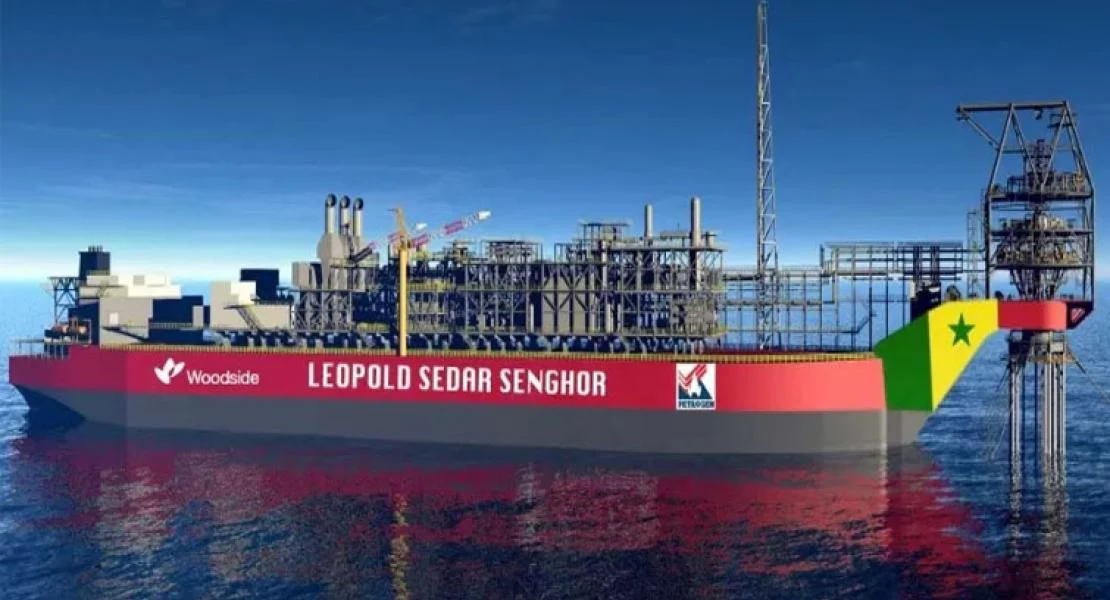
Senegal has embarked on a significant milestone with the commencement of production at its first offshore oil project, announced by Australian energy firm Woodside Energy on Tuesday. The production vessel is situated approximately 100 kilometers (60 miles) offshore at the Sangomar oil fields, with a target of producing 100,000 barrels of oil per day.
“This is a historic day for Senegal and for Woodside,” remarked Woodside Energy’s Chief Executive, Meg O’Neill.
The discovery of oil and gas reserves off Senegal’s coast in 2014 spurred hopes for an economic uplift, potentially injecting billions into the nation’s economy. However, the new administration, led by President Bassirou Diomaye Faye, plans to reassess existing oil and gas contracts with foreign companies to ensure they are more beneficial for Senegal.
In his first address to the nation in April, President Faye emphasized, “The exploitation of our natural resources, which according to the constitution belong to the people, will receive particular attention from my government. I will proceed with the disclosure of the effective ownership of extractive companies and with an audit of the mining, oil, and gas sector.”
At a rally in Dakar, Prime Minister Ousmane Sonko reiterated the government’s commitment to contract reviews, ensuring that the country’s share of resource profits is protected. “We will face multinationals,” Sonko declared.
Woodside Energy holds an 82% stake in the Sangomar project, with Senegal’s state-owned energy company, Petrosen, owning the remaining 18%. While Senegal’s fossil fuel output may not rival that of larger producers like Nigeria, Petrosen anticipates that the sector could generate over $1 billion annually for the next 30 years.
“First oil from the Sangomar field marks a new era for our country’s industry and economy, and most importantly, for our people,” stated Thierno Ly, General Manager of Petrosen.
Senegal’s energy sector is also set to expand with the upcoming Greater Tortue Ahmeyim liquefied natural gas (LNG) project at the border with Mauritania. This project, involving BP, Kosmos Energy, Mauritania’s SHM, and Petrosen, aims to begin extraction by the end of the year, with an expected annual production of around 2.5 million tons of LNG.
As Senegal steps into this new phase of energy production, the global community will be observing closely, with hopes for significant economic and industrial growth.
Photo source: Google
By: Montel Kamau
Serrari Financial Analyst
13th June, 2024