
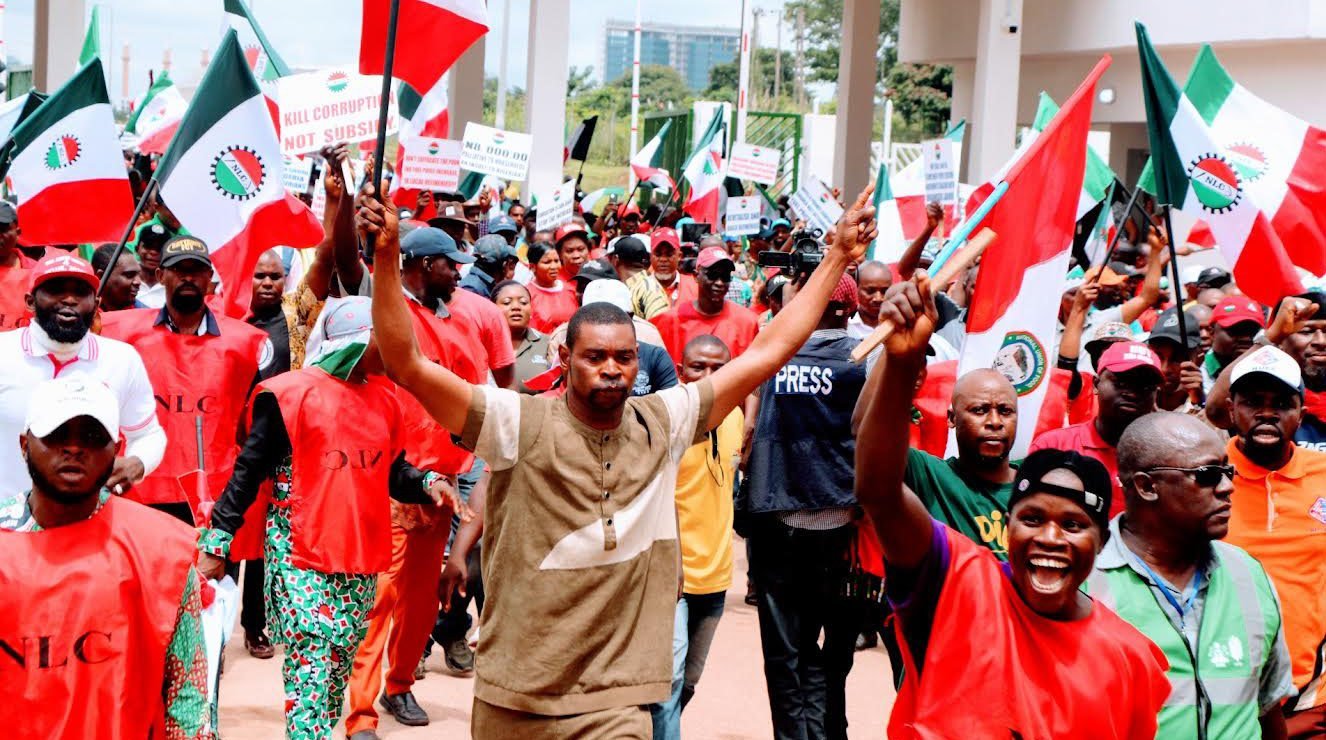
Nigeria is gripped by a significant labor strike as the nation’s main labor unions, the Nigerian Labour Congress (NLC) and the Trade Union Congress (TUC), launch an indefinite strike in response to the government’s failure to reach an agreement on a new minimum wage. This marks the fourth major strike since President Bola Tinubu assumed office last year.
The strike has led to the shutdown of the national power grid, with union members forcing operators out of power control rooms, resulting in the closure of at least six substations. Consequently, large parts of the country are experiencing power outages, disrupting daily life and critical services.
Additionally, the aviation sector has been severely affected, with airlines suspending operations due to the strike. Ibom Air has ceased flights indefinitely, and United Nigeria Airlines reports that airports nationwide are closed, with striking workers preventing any flights from departing.
The joint statement issued by electricity and aviation unions instructs members to withdraw services in solidarity with the indefinite strike, reflecting widespread dissatisfaction with the government’s economic policies. Talks between union leaders and the government collapsed on Friday, prompting the unions to announce the strike until their demands, including a new minimum wage and the reversal of recent electricity tariff hikes, are met.
Efforts by the Transmission Company of Nigeria (TCN) to restore the national grid have been hindered by ongoing union obstruction, prolonging the disruption to power supply.
Meanwhile, the Nigerian government recently secured a $500 million loan from the World Bank to bolster the electricity sector, but this has not alleviated the grievances of the striking unions or addressed the immediate concerns of Nigerian workers and consumers.
The strike highlights the growing tension between the government and labor unions, underscoring the need for a balanced approach to economic reform that considers both long-term stability and immediate social impact.
As the strike persists, pressure mounts on President Tinubu’s administration to find a resolution that addresses the grievances of the unions while ensuring the smooth functioning of critical services and the well-being of Nigerian citizens.
Photo source: Google
By: Montel Kamau
Serrari Financial Analyst
4th June, 2024