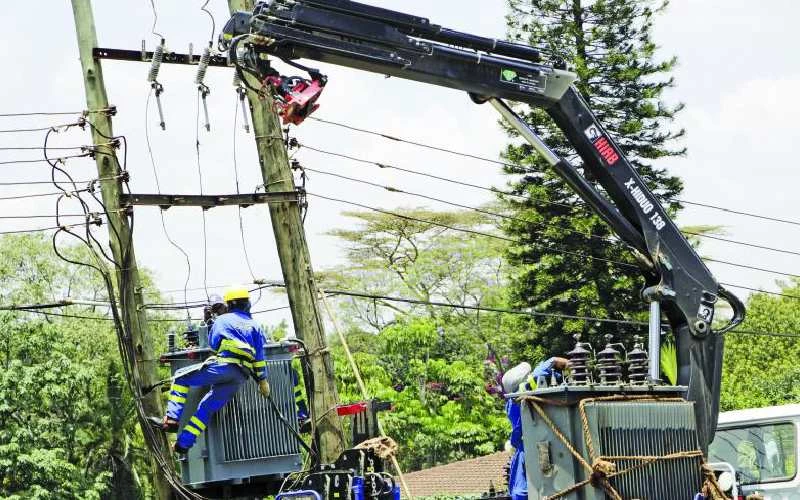
Kenya’s economy is experiencing a resurgence, evident in a notable increase in electricity demand. Last month, demand peaked at 2,177.13 Megawatts (MW), signaling robust economic activity and heightened household consumption.
During this period, local electricity generation experienced a dip, marking the second-lowest output in eight months. To meet the rising demand, Kenya bolstered its electricity imports from neighboring Ethiopia and Uganda. In January alone, Kenya imported a record-breaking 142.25 million kilowatt-hours (kWh) of electricity, with the majority sourced from Ethiopia.
Consequently, Kenya Power saw a significant uptick in electricity sales, selling 881.37 million units in January, reflecting a 6.4 percent increase compared to the previous month.
Despite a modest 5.7 percent increase in local generation during this period, it fell short of meeting the surge in demand, necessitating higher imports. Since July 2022, Kenya has been importing electricity from Ethiopia under a long-term agreement, with the option to renegotiate prices from 2027 onwards.
Geothermal sources emerged as the primary contributor to total electricity generation, accounting for 47.2 percent in the eight months leading up to February 2024, followed by hydro (24.6 percent), wind (15.2 percent), and thermal plants (9.24 percent).
As Kenya’s economy continues to recover, the electricity sector remains crucial in sustaining growth by ensuring uninterrupted power supply to support business operations and household needs.
photo source: Google
By: Montel Kamau
Serrari Financial Analyst
27th March, 2024