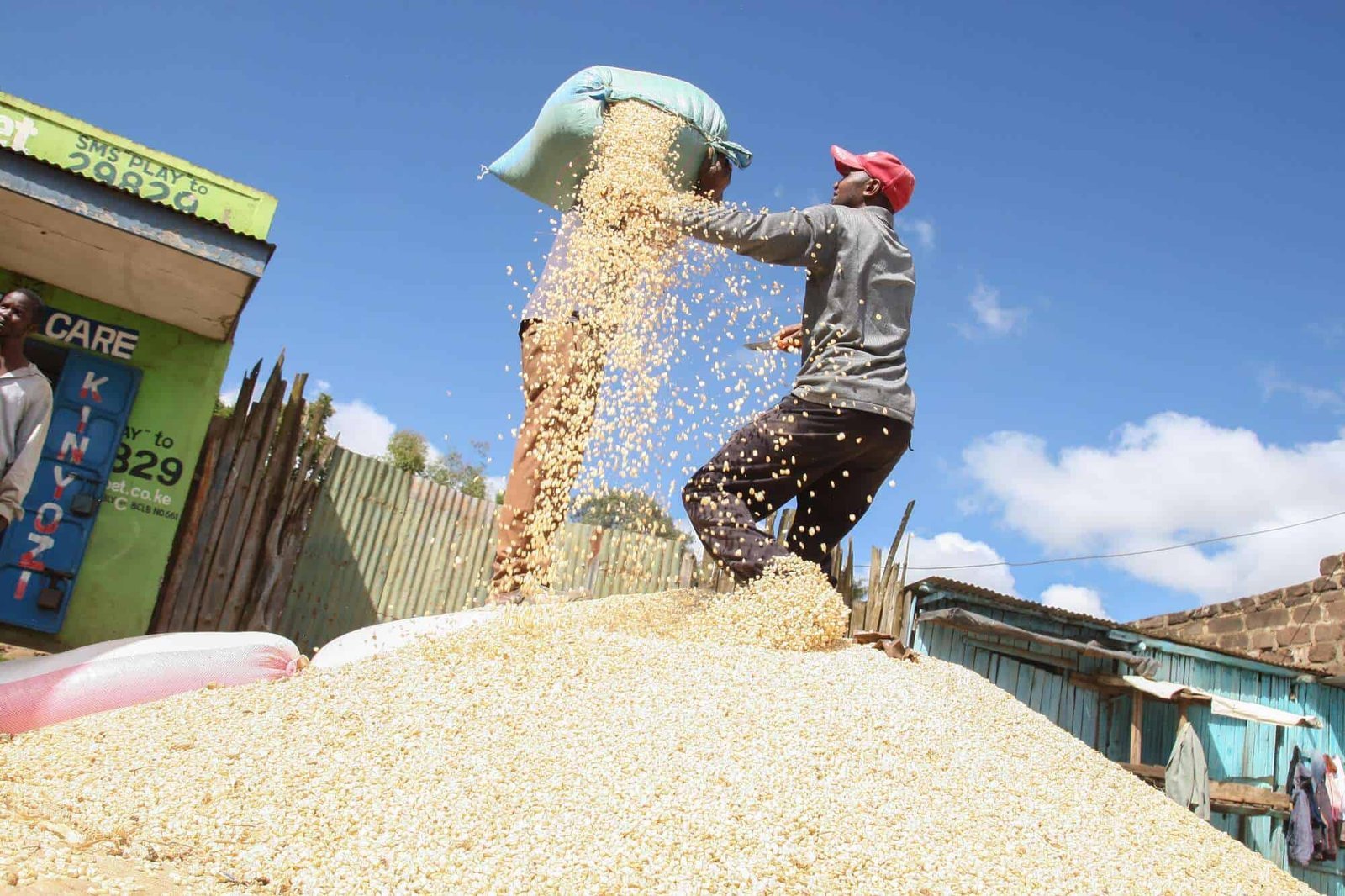
Kenya’s maize production is on the rise, thanks to favorable weather conditions. The latest assessment by the Kenya Food Security Steering Group (KFSSG) and the Ministry of Agriculture forecasts a maize yield of 4.2 million tonnes for 2024, marking a significant increase of 15-20 percent compared to the five-year average.
The improved production is a welcome relief for regions previously affected by drought, with the timely arrival of the March-April-May long rains and subsequent short rain season in October-November-December playing a crucial role. While certain areas report near-average to average maize yields, Kenya still faces a maize deficit, necessitating imports of approximately 356,000 metric tonnes annually.
Despite the positive outlook, challenges persist. Maize prices have experienced a decline since October 2023, driven by local harvests and imports, but remain above five-year averages. In arid and semi-arid lands (ASALs), staple food prices remain high due to factors such as low stocks, high demand, and currency depreciation. Additionally, reduced production in neighboring Tanzania and Uganda in 2023 has contributed to higher prices regionally.
Local challenges include crop losses due to pests and diseases. Lamu County, for example, saw substantial losses in tomato crops due to fungal diseases and pest attacks, while kales suffered yield reductions from infestations by the diamondback moth. Fall Armyworm infestations in Kwale County have also impacted livestock farming, despite control measures in place. Amidst these challenges, the national bean production remains stable at an estimated 0.93 million metric tonnes.
As Kenya continues to navigate agricultural production, stakeholders emphasize the importance of resilience, innovation, and collaboration to ensure sustainable food security for all citizens.
photo source: Google
By: Montel Kamau
Serrari Financial Analyst
20th March, 2024