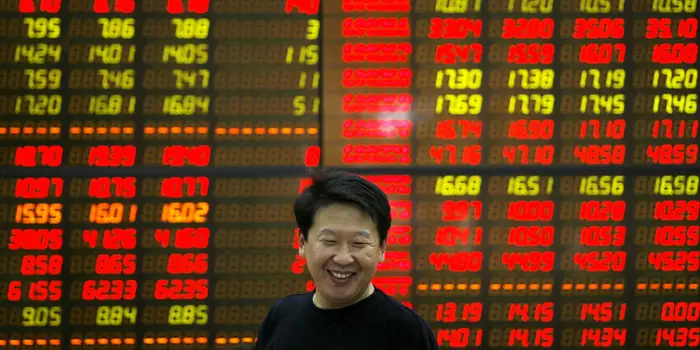
In an effort to counter the recent slump in the Chinese stock market, authorities in China are contemplating a comprehensive package of measures, according to sources familiar with the matter. Previous attempts to restore investor confidence fell short, prompting Premier Li Qiang to call for “forceful” steps.
Insiders reveal that policymakers are considering mobilizing approximately 2 trillion yuan ($278 billion), primarily sourced from the offshore accounts of Chinese state-owned enterprises. This fund would be utilized to establish a stabilization fund aimed at purchasing shares onshore through the Hong Kong exchange link. Additionally, at least 300 billion yuan of local funds are earmarked for investment in onshore shares through either China Securities Finance Corp. or Central Huijin Investment Ltd.
While officials are still deliberating on various options, some of these measures may be announced as early as this week, pending approval from the top leadership. However, plans remain subject to change, and the China Securities Regulatory Commission has not provided a comment on the matter.
The urgency reflected in these deliberations underscores the Chinese authorities’ commitment to stemming the recent selloff that drove the benchmark CSI 300 Index to a five-year low. Restoring confidence among the nation’s retail investors, many of whom have been impacted by the prolonged property downturn, is also seen as crucial for maintaining social stability.
Following these reports, a gauge of Chinese stocks listed in Hong Kong experienced a notable jump, rising as much as 3.8%, the most significant increase since November 15. The onshore benchmark CSI 300 managed to recover from an earlier decline of 1% to edge higher. Both onshore and offshore yuan reversed earlier losses, while yields on the 10-year government bond rose by one basis point to 2.5%.
Despite these measures, uncertainties persist about whether they will be sufficient to end the market downturn. A combination of the property crisis, depressed consumer sentiment, declining foreign investment, and diminished confidence among local businesses poses significant downward pressure on both the economy and financial markets.
The State Council meeting on Monday, chaired by Premier Li, provided a briefing on capital market operations and related considerations. However, no further details were disclosed regarding the specific measures under consideration.
Analysts suggest that the proposed measures may provide a short-term boost to confidence, but the long-term impact remains uncertain. China has witnessed more than $6 trillion wiped out from the market value of Chinese and Hong Kong stocks since the peak reached in 2021, highlighting the challenge faced by Beijing in restoring investor confidence.
Recent attempts to boost market sentiment, including restrictions on short selling and state funds stepping in to buy shares of major banks, have met with despondency from traders. The formation of a state-backed stabilization fund has been under consideration since at least October, though doubts have been raised about its efficacy.
China’s markets have faced challenges in recent years, with President Xi Jinping’s increasing control over private enterprises and a crackdown on the country’s tech giants contributing to a decline in investor confidence. The potential support package, though viewed positively by some, is expected to face challenges in turning around market sentiment without additional measures.
In an effort to minimize the impact on the already weakening yuan, officials are considering utilizing offshore money for the proposed measures. The current stock market meltdown is also adding pressure on snowball derivatives, structured products that promise bond-like coupons based on underlying assets trading within a certain range.
China’s largest brokerage, Citic Securities Co., recently ceased short-selling services for some clients following regulatory guidance. The potential success of the proposed measures remains uncertain, with market analysts emphasizing the need for additional measures to sustain market stability in the long term.
By Delino Gayweh
Serrari Financial Analyst
January 23, 2024