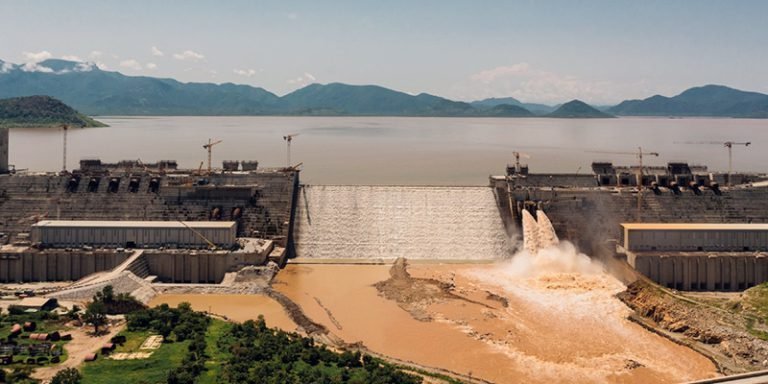
Kenya’s electricity imports from Ethiopia have been reduced by half, a consequence of the severe drought affecting the Horn of Africa region. This setback was revealed by Energy Cabinet Secretary Davis Chirchir during the National Dialogue Committee hearings aimed at addressing the cost of living.
Previously, Kenya had contracted to receive 200 megawatts of electricity from Ethiopia. However, due to the drought, only 100 megawatts are currently being supplied. The drought has also had a notable impact on local hydropower generation, as exemplified by Masinga Dam, owned by KenGen, which has not contributed to the grid for two consecutive months due to low water levels.
Masinga Dam is among the 16 hydroelectric power dams in Kenya and forms an integral part of the Seven Forks Scheme Dams along the Tana River. Fortunately, some relief is on the horizon, as rain has started to replenish the dam, causing its water levels to rise by three meters.
Kenya initiated its electricity imports from Ethiopia earlier this year as part of a long-term plan to import cheaper hydroelectric power, ultimately increasing the capacity to 400MW over three years. This initiative was set in motion through a power purchase agreement (PPA) signed between Kenya Power and Ethiopia Electric Power (EEP) in July of the previous year.
The PPA was celebrated for its potential to reduce Kenya’s reliance on costly thermal power and provide relief during periods of reduced local hydropower generation. In fact, Ethiopia’s electricity imports played a crucial role during Kenya’s challenging first quarter, characterized by a biting drought that substantially curtailed local hydropower output.
Nonetheless, the high cost of electricity remains a concern in Kenya. The escalating prices have contributed to a 6.9 percent inflation rate in October, according to the Kenya National Bureau of Statistics.
In its most recent power price review, the Energy and Petroleum Regulatory Authority (EPRA) increased the fuel energy charge by 18.7 percent to Sh4.94 per unit from the previous Sh4.16 in September. Additionally, the foreign exchange rate fluctuation adjustment was raised by 48.5 percent, from Sh1.38 per unit to Sh2.05.
The impact of reduced electricity imports from Ethiopia due to drought underscores Kenya’s vulnerability in terms of power supply and its direct influence on energy costs. As efforts continue to find sustainable solutions for Kenya’s energy needs, the ongoing drought serves as a stark reminder of the need for resilience and diversification in the country’s energy sector.
Photo (Khalil Al-Anani)
By: Montel Kamau
Serrari Financial Analyst
6th November, 2023