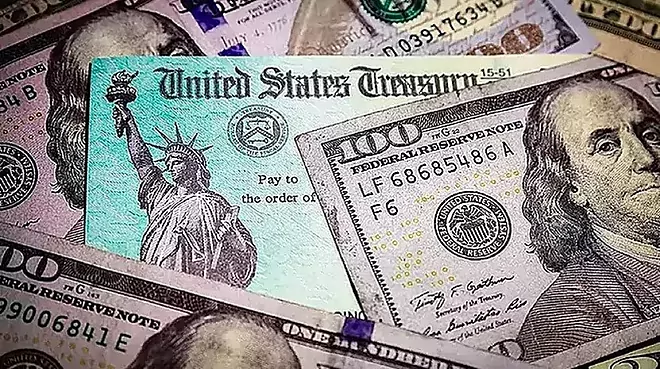
The US financial landscape has witnessed a significant milestone, as the yield on the benchmark 10-year U.S. Treasury note surged past the 5.0% threshold. This achievement hasn’t been seen since July 2007, and it comes on the heels of a notable but short-lived attempt last week.
The 10-year Treasury bond, long-regarded as a safe haven during economic uncertainties and a global barometer for borrowing costs, has been on a steady ascent. This rise is primarily attributed to the market’s anticipation of robust U.S. economic growth and lingering concerns over fiscal matters.
The surge in long-term yields intensified following remarks by Federal Reserve Chair Jerome Powell, who highlighted the strength of the U.S. economy and its robust labor market, hinting at the possibility of tighter financial conditions.
Today, the 10-year yield reached 5.004%, marking an approximately 8 basis point (bps) increase for the day. Just last Thursday, it briefly flirted with a 16-year high of 5.001%. This impressive surge amounts to a total increase of 160 basis points since mid-May.
While the Federal Reserve’s hawkish stance plays a role in this development, concerns over fiscal policies are also in the spotlight. Treasury borrowing costs have escalated, as Congress remains divided over next year’s spending bills and resorts to stopgap measures to avoid a government shutdown.
Simultaneously, the Federal Reserve continues its efforts to reduce its bond holdings. Against this backdrop, the U.S. government reported a $1.695 trillion budget deficit for the year ending in September 2023, reflecting a substantial 23% increase from the previous year. This marks the largest budget deficit since the $2.78 trillion gap recorded in 2021 during the height of the COVID-19 pandemic.
Adding to the fiscal challenges is President Joe Biden’s request for an additional $100 billion in new foreign aid and security spending. This includes notable allocations for Ukraine, Israel, U.S. border security, and the Indo-Pacific region.
Kyle Rodda, a senior financial markets analyst at Capital.com, commented, “The fact that the entire yield curve is at or above 5% is indeed remarkable. There’s ongoing debate about the driving forces behind this dynamic. It is, of course, a combination of strong economic growth, high issuance, and quantitative tightening.”
Notably, the two-year U.S. Treasury yield also saw an increase of 4 bps, reaching 5.125%, while the 30-year yield rose by 8 bps, reaching 5.164%.
This surge in U.S. Treasury yields is being closely watched by global markets as it reflects broader economic dynamics and the Federal Reserve’s approach to economic policies.
Photo (Marca)
By: Montel Kamau
Serrari Financial Analyst
23rd October, 2023