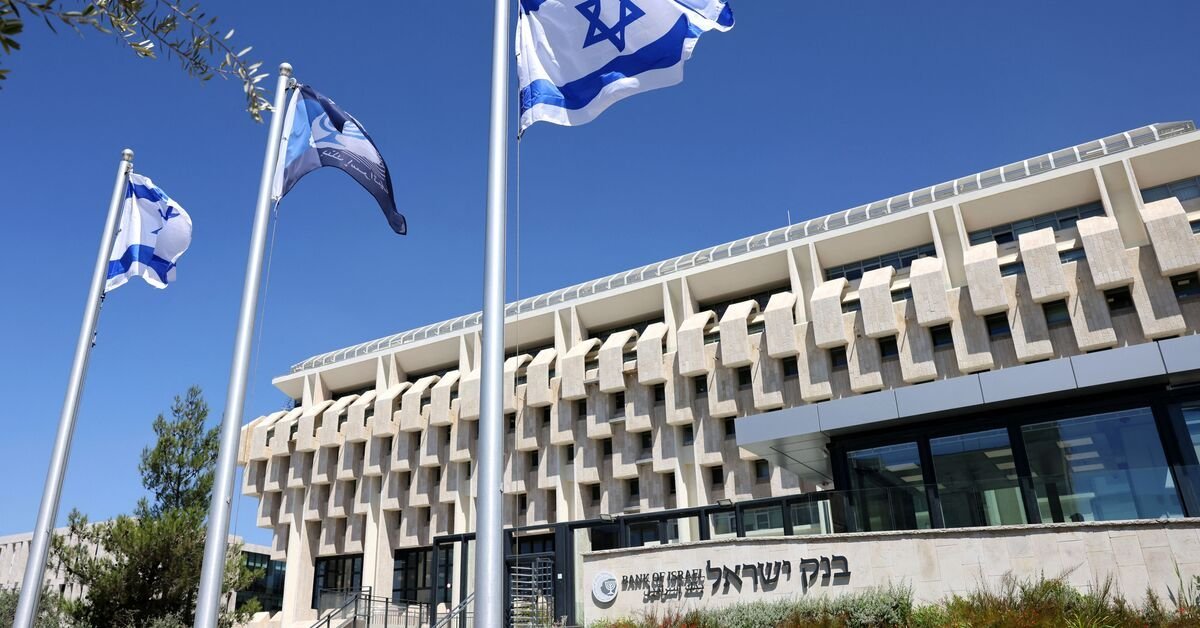
The Bank of Israel signaled a measured stance on reducing interest rates, expressing concerns about the potential for inflation and the impact on the shekel. This comes as Israel grapples with ongoing regional tensions, including the recent conflict with Hamas in Gaza.
Interest rates have seen a significant rise, increasing from a mere 0.1% to the current 4.75% since the central bank last convened in April 2022. Despite market expectations of an impending rate cut, the bank opted to keep rates unchanged during its past two meetings in July and September. This has piqued the interest of investors and economists, who keenly monitor the central bank for insights into Israel’s monetary policy.
Deputy Governor Andrew Abir, in a recent meeting with economists, underscored the bank’s central focus on maintaining stability in financial markets and ensuring economic predictability. In line with this approach, the Bank of Israel recently announced its intention to sell up to $30 billion of foreign currency, an effort aimed at preventing a significant depreciation of the shekel. The shekel had already weakened by approximately 10% against the U.S. dollar earlier this year before hostilities with Hamas erupted on October 7.
Since the onset of the recent conflict, the shekel has experienced further depreciation, reaching a rate of 4 shekels per U.S. dollar. This marks the first time the exchange rate has reached this level since 2015. The central bank has implemented specific tools to stabilize the foreign exchange market, which has, in turn, contributed to stabilizing other markets. The goal is to ensure that other monetary policy tools do not disrupt these stabilization efforts in the short term.
Abir reiterated statements from Governor Amir Yaron, emphasizing that the most significant inflationary risk over the past nine months has been the depreciation of the shekel, which is likely to persist. The central bank estimates that shekel fluctuations can account for up to 20% or 1.5 percentage points of the inflation rate.
Recent data shows a decrease in Israel’s inflation rate, from 4.1% in August to 3.8% in September. Nevertheless, it remains above the official target range of 1-3%, indicating the importance of addressing inflationary pressures.
Furthermore, Abir revealed plans to alleviate the financial strain on households and businesses grappling with loan repayments. The Bank of Israel is devising a comprehensive plan to postpone these payments for the entire population, with a particular focus on those adversely affected by the ongoing conflict. Notably, this initiative would be interest and fee-free, offering much-needed relief during these challenging times.
With the Bank of Israel’s next interest rate decision scheduled for Monday, the market will be closely monitoring the central bank’s strategy for interest rates and monetary policy in the midst of ongoing regional uncertainties.
AHMAD GHARABLI
Credit: AFP via Getty Images
By: Montel Kamau
Serrari Financial Analyst
18th October, 2023