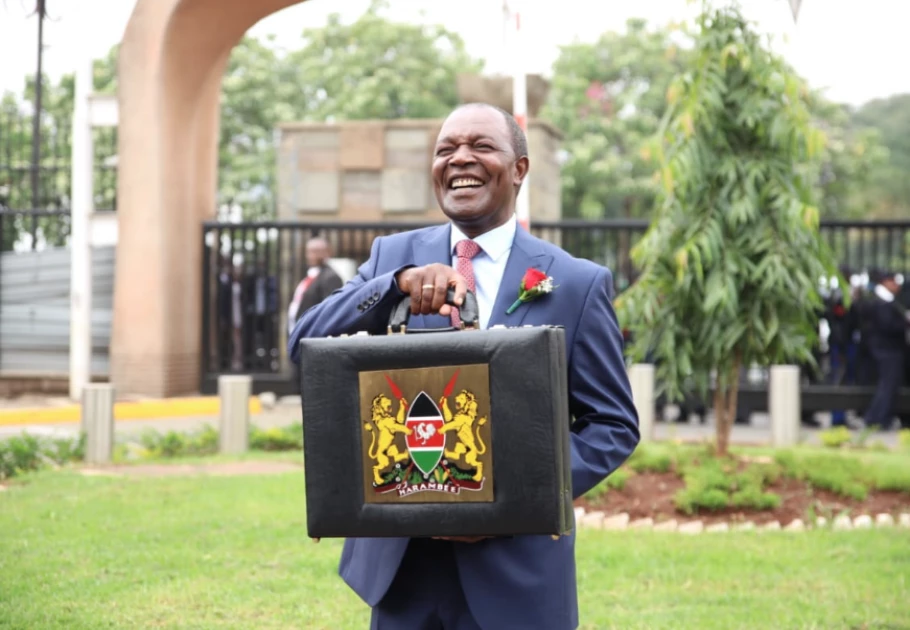
The Kenyan government has embarked on a strategic plan to reduce recurrent spending by Ministries, Departments, and Agencies (MDAs), with the aim of saving an estimated Sh130.2 billion. This move, approved by the Cabinet on Tuesday, underscores the government’s commitment to fiscal responsibility.
In a press statement, the Cabinet explained that the decision to streamline spending is part of its fiscal consolidation plan to address the fiscal deficit. It has given the green light to cut the recurrent budget of each Ministry and State Department by 10 percent. These budgetary reductions will be incorporated into Supplementary Appropriations No.1 of the financial year 2023/24 budget cycle.
If successfully implemented, these cuts will lead to a significant reduction in total recurrent spending by MDAs, which currently stands at Sh1.302 trillion. Notably, entities with the highest recurrent allocations, including the Teachers Service Commission, the Ministry of Defence, the State Department for Basic Education, the National Police Service, and the State Department for Higher Education and Research, will experience the most substantial reductions in their day-to-day spending.
This adjustment in recurrent spending represents a departure from the previous expectations of an increase in recurrent expenditure. The initial draft of the 2023 budget and outlook paper projected a rise from Sh2.536 trillion to Sh2.682 trillion.
This paper, a precursor to the first 2023/24 supplementary budget scheduled for release later this month, indicates that overall government spending is poised to increase by Sh160 billion, reaching Sh3.908 trillion, up from the approved budget of Sh3.746 trillion. Additionally, development spending is expected to rise to Sh793.8 billion from Sh777.8 billion, reflecting the government’s commitment to key development initiatives.
In response to fiscal challenges, the Treasury plans to increase borrowing to cover a broader fiscal deficit, with total financing estimated at Sh864 billion, up from the previous Sh718.9 billion. Notably, net external financing is projected to increase to Sh448.7 billion from Sh131.5 billion, while net domestic borrowing is anticipated to decline to Sh415.3 billion from Sh587.4 billion. This shift reflects the government’s intention to reduce its reliance on the domestic credit market, particularly given the prevailing rise in interest rates.
The decision to curtail recurrent expenditure not only signals a temporary respite from further borrowing but also lays the groundwork for a more robust fiscal consolidation strategy.
President Ruto’s administration remains steadfast in its commitment to fiscal consolidation, combining expenditure rationalization and enhanced domestic revenue mobilization. The National Treasury has set an ambitious target of reducing the fiscal deficit to 5.4 percent of GDP by June next year, down from the previous 5.6 percent.
The National Treasury’s statement emphasizes, “The government will continue to pursue a growth-friendly fiscal consolidation plan that signals debt sustainability and a manageable fiscal gap. This plan will see a gradual decline in the fiscal deficit from 5.4 percent of GDP in the financial year 2023/24 to 4.4 percent of GDP in the financial year 2024/25 and further to 3.6 percent of GDP in the financial year 2026/27.”
Photo: Google
By: Montel Kamau
Serrari Financial Analyst
5th October, 2023