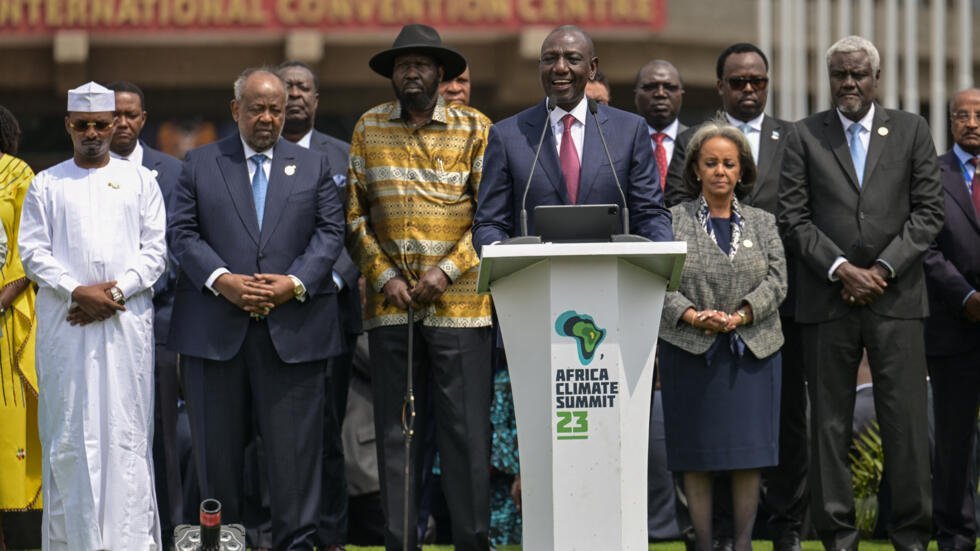
The Africa Climate Summit, a landmark gathering of leaders from across the continent, concluded with a resounding declaration of intent to combat climate change and drive sustainable growth. At least 17 heads of state were individually present, with others sending representatives, as they collectively adopted the historic Nairobi Declaration.
The summit, held at the Kenyatta International Convention Centre (KICC) in Nairobi, witnessed a convergence of political leaders, private sector stakeholders, civil society organizations, and representatives of indigenous peoples and local communities. Their shared objective: to craft a roadmap for Africa’s contribution to global climate action.
Key highlights of the commitments made by African nations include:
Green Economic Growth: Leaders aim to propel Africa’s economic growth while limiting emissions, fostering green production and supply chains on a global scale, and supporting decarbonization efforts.
Climate-Positive Growth: Economic development plans will prioritize climate-positive growth, with a focus on just energy transitions, renewable energy generation, sustainable agriculture, and the protection of nature and biodiversity.
Attracting Green Investments: African countries have pledged to develop and implement policies, regulations, and incentives to attract local, regional, and global investments in green growth and inclusive economies.
Continental Collaboration: African leaders will strengthen continental collaboration, including regional grid interconnectivity and operationalizing the Africa Continental Free Trade Area (AfCFTA) Agreement.
Green Industrialization: Prioritizing energy-intensive industries, Africa aims to accelerate renewable energy deployment and add value to its natural resources.
Sustainable Agriculture: Efforts to boost agricultural yields through sustainable practices will enhance food security while minimizing environmental impacts.
Halting Biodiversity Loss: African nations are committed to strengthening actions to halt biodiversity loss, deforestation, desertification, and land degradation neutrality.
Global Standards: Africa will lead in developing global standards, metrics, and market mechanisms to value and compensate for nature protection, biodiversity, and climate services.
Biodiversity Strategy: The draft African Union Biodiversity Strategy and Action Plan will be finalized and implemented, aligning with the 2050 vision of living in harmony with nature.
Global Partnerships: Effective partnerships between Africa and other regions will be established to meet financial, technical, and knowledge-sharing needs for climate adaptation.
Urban Resilience: Investments in climate-resilient urban infrastructure, including upgrading informal settlements, will be promoted.
Support for Communities: Indigenous peoples, smallholder farmers, and local communities will receive support in transitioning to green economies.
Adaptation Planning: Adaptation will be mainstreamed into development policy-making and planning, including Nationally Determined Contributions (NDCs).
Early Warning Systems: Early warning systems and climate information services will be strengthened to protect lives, livelihoods, and assets, with an emphasis on indigenous knowledge and citizen science.
African Union Strategy: Acceleration of the African Union Climate Change and Resilient Development Strategy and Action Plan (2022-32) will be a top priority.
The commitments made at the Africa Climate Summit represent a significant step towards addressing climate change on the continent and contributing to global efforts. With leaders, businesses, and communities uniting, Africa is poised to lead the way in creating a sustainable and resilient future for all.
Photo Source: Simon Maina, AFP
By: Montel Kamau
Serrari Financial Analyst
6th September, 2023