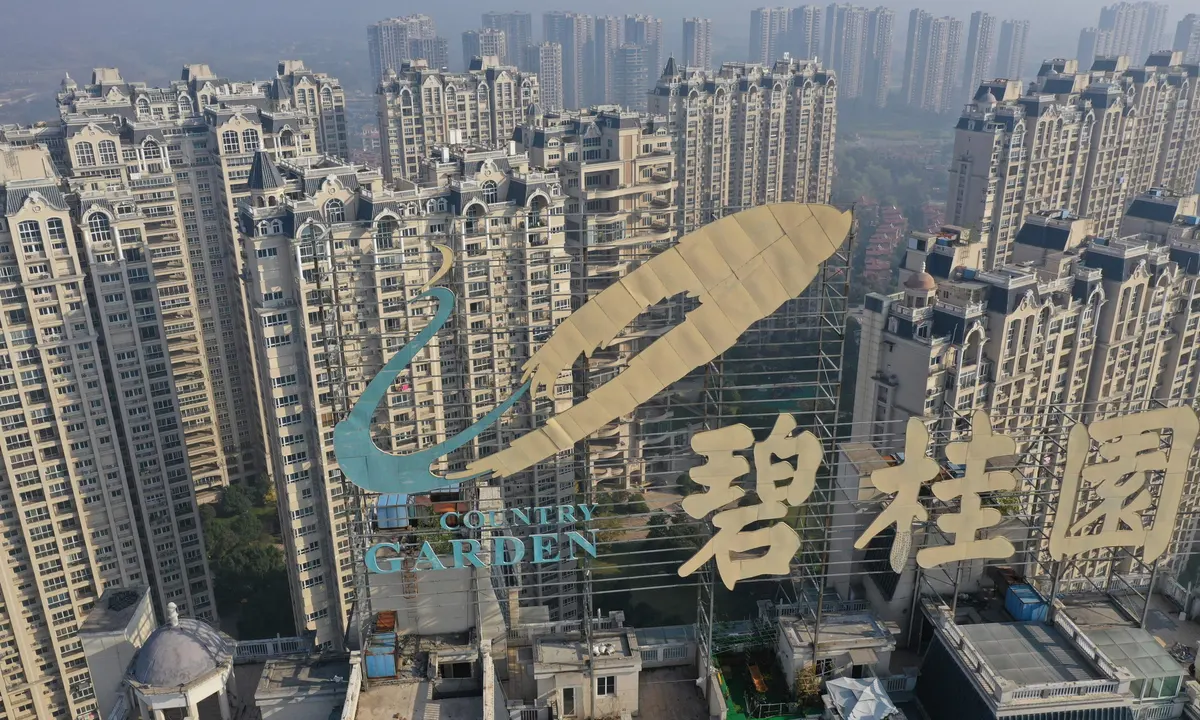
In a bid to manage mounting financial pressures, Country Garden, one of China’s largest private property developers, has formally requested a 40-day extension on the repayment of a renminbi bond that is set to mature in the upcoming week. This development underscores the growing distress within the Chinese real estate sector. The request, which arrives just a day before the release of Country Garden’s first-half financial results, highlights the increasing financial challenges faced by the sector despite recent assurances of heightened support from top officials aimed at stabilizing the industry.
Amidst a backdrop of missed payments on dollar bond obligations and a lack of substantial stimulus to rescue the struggling sector, shares of developers listed on the Hong Kong Stock Exchange have witnessed a significant downturn of approximately one-third this year. The absence of concrete measures to alleviate the challenges has put substantial downward pressure on these developers’ stock prices.
China’s real estate giant China Evergrande exemplified the sector’s liquidity crisis when its shares plummeted by nearly 90% upon resuming trading after a 17-month hiatus. This downturn coincided with the postponement of a pivotal restructuring meeting with creditors.
Country Garden, burdened with liabilities amounting to nearly $200 billion, is seeking consent from its creditors to extend the maturity date of a bond with an outstanding principal of Rmb3.9 billion ($530 million), which is due on September 4th. A voting session to decide on this extension will be convened no later than August 31st, as outlined in a confidential communication to investors via the Shanghai Stock Exchange.
The situation is particularly noteworthy given that Country Garden was once regarded as one of the least likely Chinese developers to default. However, recent events have altered this perception as the company missed interest payments totaling $22.5 million on two international bonds of $500 million each earlier this month.
Market analysts have pointed out that while offshore obligations may be of concern, the central government has taken a more serious stance on onshore obligations. Creditors, therefore, are anticipated to feel compelled to approve the extension of the renminbi bond’s maturity date.
A bond trader based in Hong Kong noted, “The bondholders don’t want Country Garden to default, they want to discuss better terms, but they couldn’t get 50 percent approval for a full extension, so they have to go for a grace period.” Despite potential approval, traders caution that this action merely delays the underlying issue.
News of the extension request, initially reported by Bloomberg, led to a temporary uptick of around 9% in Country Garden’s shares during afternoon trading in Hong Kong. However, the company’s stock value remains down by approximately 50% this year, equating to a loss of approximately $17 billion in market capitalization.
Meanwhile, Country Garden Services, the developer’s real estate management affiliate, disclosed a year-on-year profit decrease of 11% to Rmb2.35 billion in its first-half results released on Tuesday.
With investor attention now focused on early September, when the grace period for the previously missed payments on international bonds will lapse, uncertainties loom. The question remains whether Country Garden will be able to meet its obligations concerning these dollar-denominated bonds.
As the situation unfolds, market participants closely monitor the evolving developments within the Chinese real estate sector, which continues to grapple with unprecedented challenges and uncertainties.
Photo Source: Google
August 30, 2023
By: Delino Gayweh
Serrari Financial Analyst