In a recent report, the Kenya Bankers Association (KBA) revealed that improved activity in Kenya’s private sector resulted in remarkable growth within the banking industry, achieving double-digit credit expansion in the previous year.
The State of Banking Industry Report 2023 by KBA unveiled that loans and advances surged by 12.5 percent, reaching Sh3.6 trillion in 2022 from Sh3.2 trillion in 2021.
Medium-sized banks experienced a 9.1 percent growth in lending, increasing to Sh472 billion in 2022 from Sh432.5 billion in 2021. Large banks saw an even greater expansion of 14.7 percent, with lending rising to Sh2.8 trillion from Sh2.5 trillion. Conversely, small banks faced a 2.9 percent decline, with lending dropping to Sh264.2 billion in 2022 from Sh271.98 billion in 2021, largely due to repayments of loans.
The report highlighted that this surge in private-sector lending was influenced by sector-specific credit uptake, associated risk dynamics, and projected sector performance.
The credit growth was primarily absorbed by four key sectors: personal/household (27.1 percent of total private sector credit), trade (18 percent), manufacturing (14.6 percent), and real estate (12.9 percent), collectively accounting for 72.6 percent of the total industry loan portfolio.
The fifth edition of the State of the Banking Industry (SBI) Report from the Kenya Bankers Association illuminated various factors that shaped Kenya’s economic trajectory in 2022. The report underscored the nation’s economic resilience in the face of global and domestic challenges.
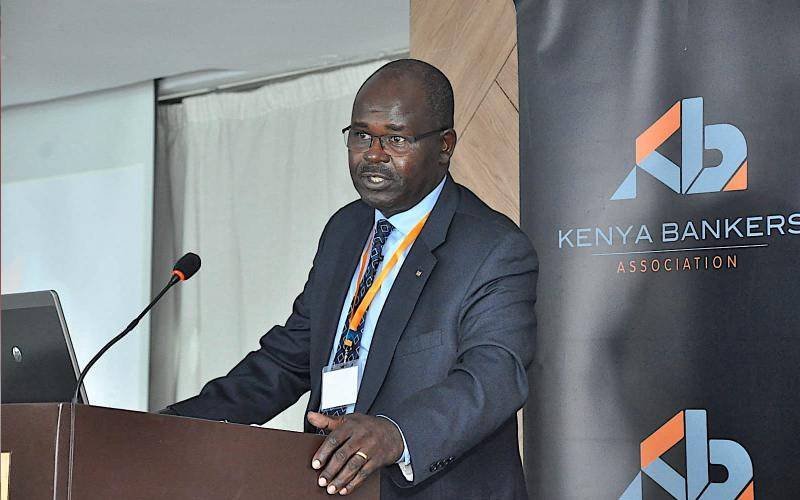
Habil Olaka, Chief Executive Officer of the Kenya Bankers Association, explained, “The SBI Report examines growth indicators, asset quality, and financial performance, offering insight into the banking sector’s robustness.”
Despite global and domestic shocks, Kenya’s macroeconomic environment displayed resilience in 2022, achieving a growth rate of 4.8 percent, down from 7.6 percent in 2021. The report attributed this shift to stronger growth in services and industry, counterbalancing a downturn in agriculture.
Monetary policy tightening was introduced to combat inflationary pressures, resulting in increased interest rates and government borrowing costs. Addressing inflation and reducing debt vulnerabilities emerged as key policy priorities.
The report emphasized two regulatory developments that shaped the credit market in 2022. The Central Bank of Kenya’s endorsement of banks’ risk-based credit pricing models enhanced banks’ ability to price credit effectively. Additionally, the Credit Repair Framework, launched in November 2022, aimed to address digital non-performing loans and enhance borrower credit records.
Banking sector assets, constituting about 47.1 percent of GDP, grew by 8.2 percent to Sh6.5 trillion in 2022 from Sh6.0 trillion in 2021. This growth was primarily driven by increased loans and advances and investments in government securities, which comprised 79.7 percent of total assets.
The report anticipated that due to elevated private-sector credit risk and an anticipated economic slowdown in 2023, banks might pivot toward lower-risk government securities, possibly tempering the progress in private-sector credit growth. Nonetheless, the banking sector is poised to weather challenges with strong capitalization and liquidity levels.
Photo Source: Google
23rd August 2023
Delino Gayweh
Serrari Financial Analyst