

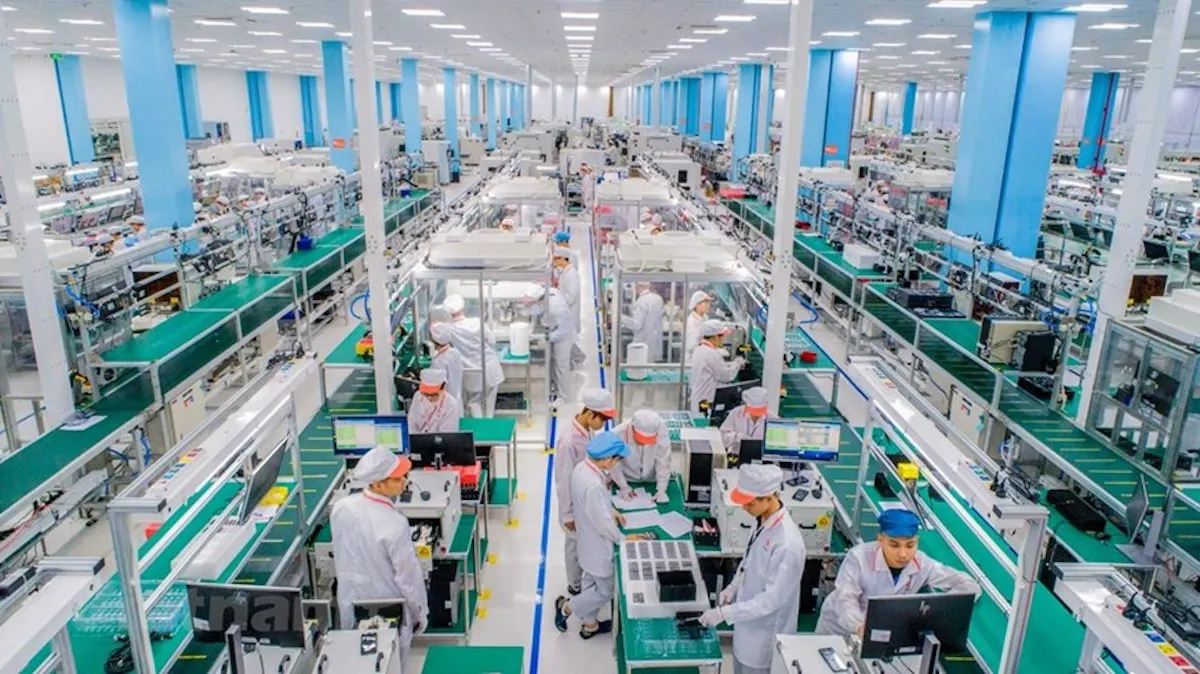
In July, factories across Asia encountered a slowdown in demand, reflecting the ongoing struggle for growth in the global economy. Nine private surveys revealed that six of Asia’s major producers experienced a contraction in manufacturing activity, with China’s manufacturing activity slipping into contraction unexpectedly for the first time in three months.
The slowdown extended to other Asian economies, including Japan, South Korea, Malaysia, Taiwan, and Vietnam, all witnessing a decline in manufacturing activity. However, India, Indonesia, and the Philippines stood out with their manufacturing sectors showing expansion.
Shivaan Tandon, an emerging Asia economist with Capital Economics, pointed out that “Falling new orders, bleak employment prospects, and high inventory levels point to subdued factory activity in the coming months,” and highlighted external demand as a potential headwind to growth in the latter half of 2023.
Amidst the challenging situation, some Asian economies saw a silver lining in reduced input costs. Competitive pricing strategies and improved material availability enabled certain manufacturers to cut costs, raising hopes for looser monetary policies in certain emerging Asian markets.
Taiwan’s manufacturing PMI reading was particularly concerning, marking the sharpest decline recorded since November 2022. Firms in Taiwan reported reduced demand across multiple markets, including Europe, Japan, mainland China, and the United States.
In China, the Caixin/S&P PMI reading fell to 49.2 in July, driven by a decline in new businesses received by producers, which could pose challenges for policymakers seeking to reignite momentum in China’s post-COVID recovery.
Japan, South Korea, Taiwan, and Vietnam’s contraction in manufacturing activity highlighted the strain caused by sluggish Chinese demand on the region’s economies. In contrast, India’s manufacturing sector demonstrated resilience, continuing to expand at a healthy pace despite a slowdown for the second consecutive month.
The International Monetary Fund (IMF) projected optimism for emerging Asian economies, anticipating accelerated growth in 2023. However, uncertainties surrounding China’s economic slowdown cast shadows on the region’s outlook.
Policymakers face a delicate task of balancing monetary policies to control inflation and stimulate growth while navigating the challenges posed by China’s economic weakness. The region’s resilience will play a critical role in navigating the turbulent global economic landscape ahead.
By: Montel Kamau Serrari Financial Analyst 1st August, 2023
photo source Google