
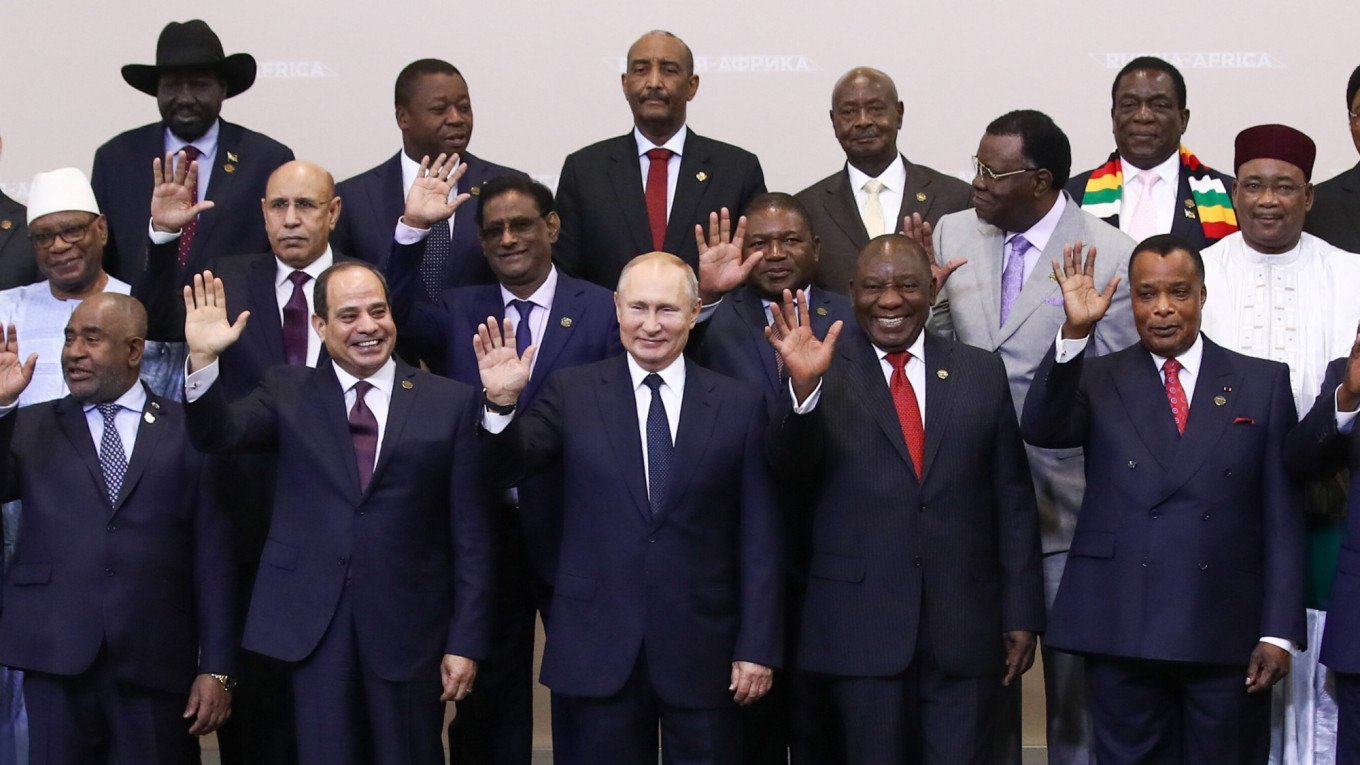
As African leaders converge in St. Petersburg for the second Russia-Africa Summit. With 49 African delegations and 17 heads of state in attendance, the two-day summit and economic forum offer a unique opportunity to explore key areas of cooperation between Russia and Africa.
Top on the summit’s agenda are discussions surrounding food security and the future involvement of the Wagner military group on the African continent. As the war in Ukraine continues, Russian President Vladimir Putin aims to demonstrate his country’s commitment to Africa, which is increasingly assertive on the world stage. The summit also presents a platform for renewed efforts by African leaders to broker peace in Ukraine.
The presence of the Wagner mercenaries in several African countries has sparked concerns among Western nations about Russia’s expanding political, military, and economic influence south of the Sahara. However, African leaders seem to prioritize cooperative engagement over getting embroiled in geopolitical rivalries. They are seeking opportunities to bolster their national and cultural sovereignty while playing an active role in resolving regional and global challenges.
As Russia and China compete for influence in Africa, the summit showcases how Moscow’s assertive return is being observed by Western foreign ministries with unease. While Western powers express concerns, African governments view the summit as an avenue to strengthen ties and build partnerships with multiple major actors, including China, India, Turkey, the Gulf states, South Korea, Western nations, and Japan.
Ahead of the summit, Russian officials have pledged a new program of support for the continent. The “economic and humanitarian forum” during the summit has attracted African business figures, signaling opportunities for trade and investment agreements in various sectors.
Building on academic and research ties developed during the Cold War era, Russia seeks to forge closer economic relations with Africa. Its engagement comes at a time when many African countries are striving to address their development and security challenges and are open to welcoming international assistance.
However, some issues remain sensitive. Russia’s recent withdrawal from a deal allowing Black Sea exports has raised global concerns about food security. While Putin promises to offer free grain to low-income African countries, there are concerns about the impact of rising food prices in the region.
Another pressing concern is the fate of Russia’s Wagner military company, led by Yevgeny Prigozhin, following its recent rebellion against the Kremlin. The company’s future will be critical for countries like Sudan and Mali, which have engaged Wagner in exchange for natural resources like gold.
Throughout the summit, African leaders will likely seek opportunities for bilateral trade and investment with Russia, seeking partnerships that align with their development priorities. While the global spotlight is on the event, African nations are poised to leverage this platform to pursue mutually beneficial economic ties with Russia and solidify their place in the emerging multipolar world.
By: Montel Kamau Serrari Financial Analyst 27th July, 2023
photo source Google