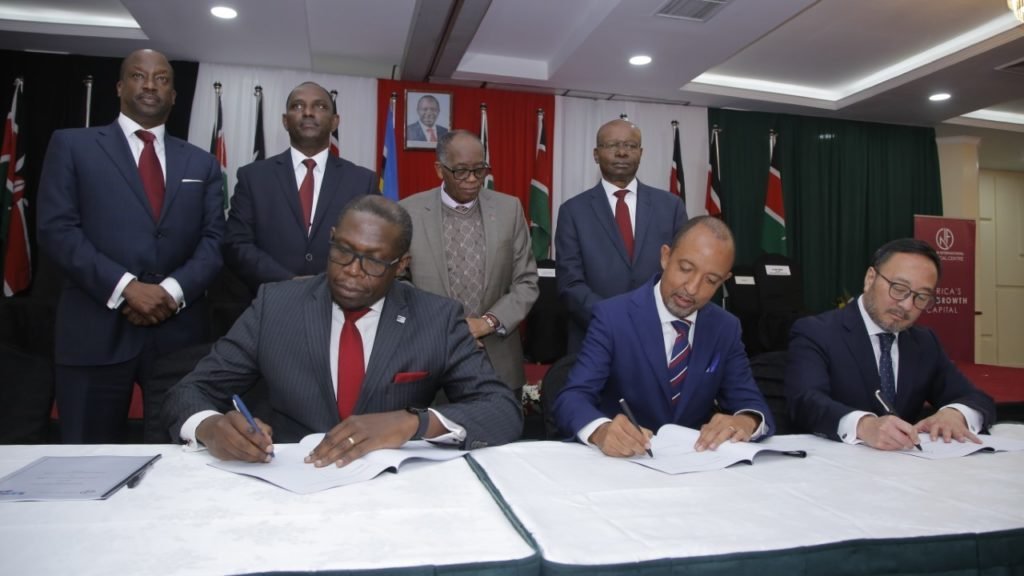
The Capital Markets Authority (CMA) of Kenya is planning to conduct a comprehensive evaluation of the country’s carbon market, including its ecosystem and stakeholder mapping. The goal is to understand the demand, supply conditions, and growth trajectory of the market, which will then guide the development of a policy framework for overseeing a robust and compliant voluntary carbon market.
Mr. Luke Ombara, the Director of Regulatory Policy and Strategy at CMA, mentioned in an interview with Kenyan Wall Street that they will support the Nairobi Securities Exchange (NSE) in establishing a carbon credits exchange. This collaboration comes after the signing of a Memorandum of Understanding (MOU) with the Air Carbon Exchange Group and Nairobi International Financial Centre (NIFCA) in July 2022, as part of their efforts to create this new marketplace.
CMA’s action plan includes the establishment of an innovative and supportive oversight framework for Kenya’s carbon markets. The ultimate aim is to position Kenya as a prominent hub for carbon credits trading in Africa. In the recent Q2 2023 Soundness Report, the NSE saw a decrease in liquidity to 0.8% compared to 2.47% in Q1 2023.
To boost domestic and foreign investor participation, CMA intends to engage with key market stakeholders. Foreign investor participation reached a medium of 44.95% in Q2 2023, up from 41.24% in Q1 2023. Mr. Luke Ombara, CMA’s Director of Policy and Market Development, highlighted that foreign investors still find significant investment opportunities in listed firms, particularly as several blue-chip companies declare dividends.
However, CMA has expressed concern about the concentration of investor interest in a few select listed firms, such as Safaricom Plc, Equity Group Holdings Plc, East African Breweries Limited (EABL), KCB Group, and Co-operative Bank of Kenya Limited. These top five listed firms accounted for 67.80% of the entire NSE Market Capitalization in Q2 2023, compared to 71.97% in Q1 2023.
Mr. Ombara pointed out that timely repatriation of income remains challenging due to timely access to foreign exchange and other structural market challenges. In June, the NSE experienced a net capital outflow of KSh 113 million for the first time since February 2022.
CMA is currently in discussions with Morgan Stanley Capital International (MSCI), a firm that provides investment data and analytics services to investors, to address their concerns about potential barriers to foreign investors at the NSE.
Another concern raised by CMA is the sustained increase in interest returns from investments in Government securities, which is leading to a shift of investments away from the NSE. This, in turn, makes the corporate debt markets too expensive for potential debt issuers, according to Mr. Ombara.
August 1, 2023 Delino Gayweh Serrari Financial Analyst
photo source Google